TRUFFLE OAK TREES
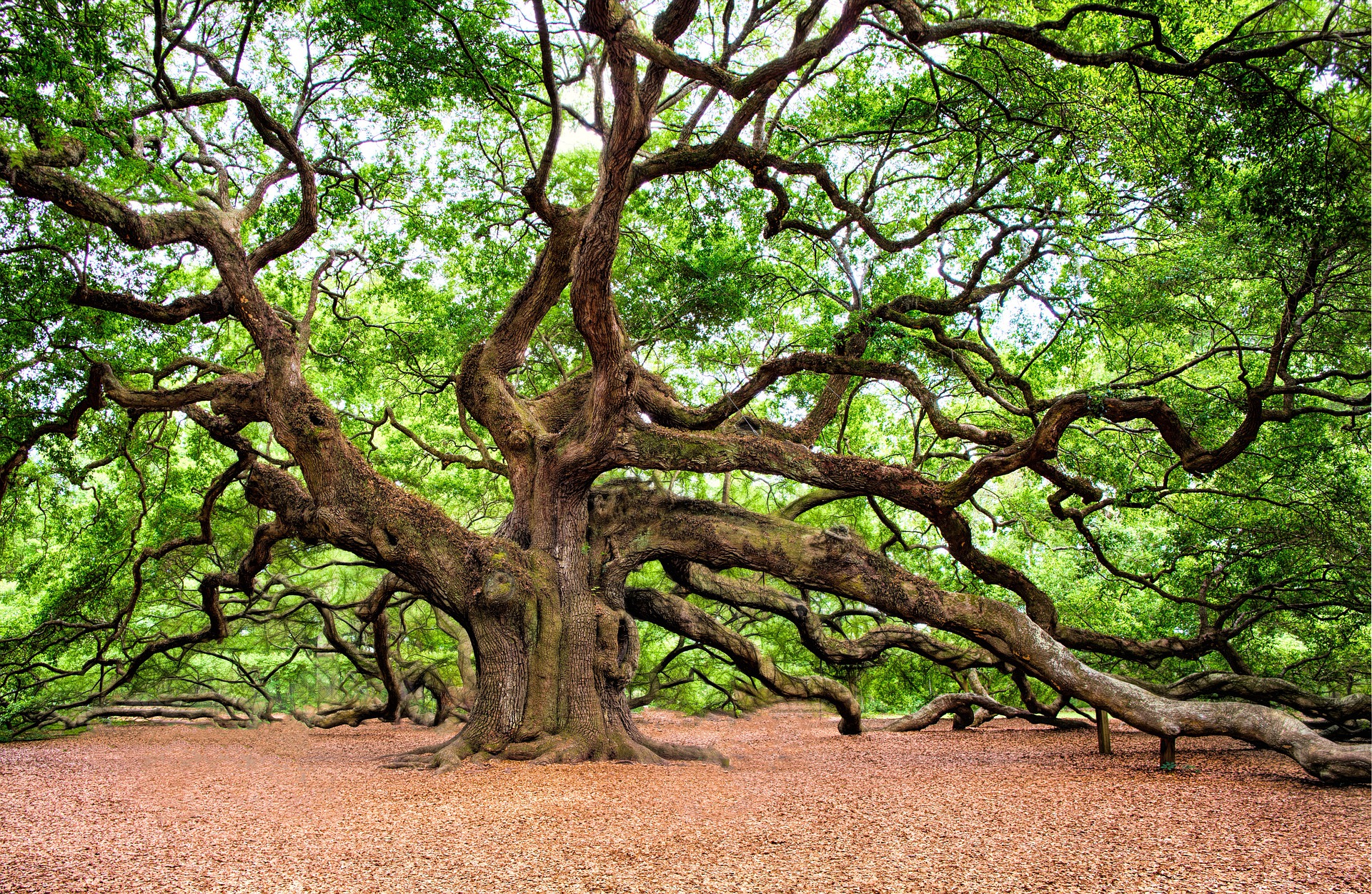
Modern Truffle Growing — But What Does That Really Mean?
At the Domaine de Cordis, modern truffle growing is built on several key parameters that must all be taken into account to harvest truffles around the sixth year and to ensure long-term, sustainable production.
This approach already applies to our various plots.
Every parameter has been carefully designed and refined based on our own plantations.
These principles can serve as a model, which is why we share our work and research with you — but remember that each truffle orchard remains unique.
Growing techniques may share similarities, but each orchard must be adapted to its own specific conditions: geographic area, altitude, climate, soil type, terroir, tree varieties, and many other factors.
Here are 10 strategic points that reflect our core philosophy.
Interested in planting your own truffle oak?
A SUITABLE SOIL FOR A SUCCESSFUL PLANTATION
-
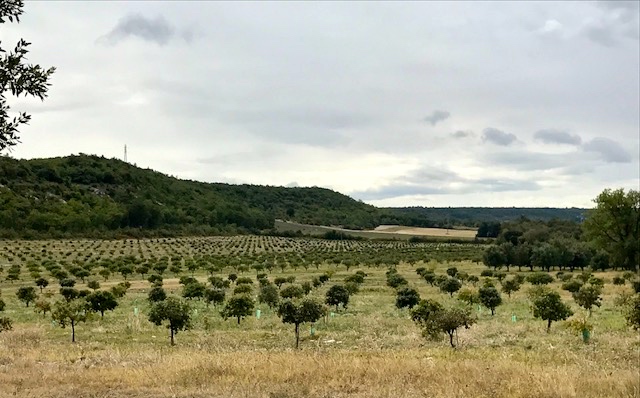
pH around 8.2 (limestone soil). A soil analysis is recommended for large-scale plantations.
-
Well-draining soil — mycelium cannot tolerate standing water.
-
Suitable for various soil textures: clayey, silty, or sandy.
-
Ideal planting density: about 400 trees per hectare (spacing of 5 meters between rows and 5 meters between trees).
CHOOSING THE RIGHT TREES
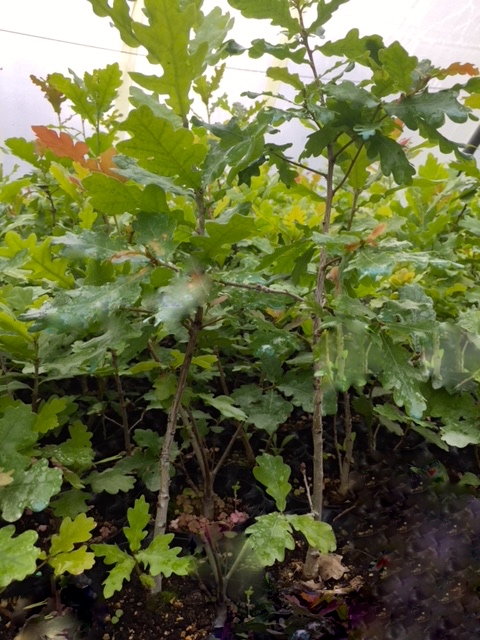
For us, the genetics of the acorn is essential.
An acorn from our own terroir, taken from a productive tree, has the best chances to grow under optimal conditions and eventually produce truffles.
Why preserve or maintain dog-breeding lines for beauty contests or tradition, if genetics didn’t matter?
Ask yourself the question… then let’s stop pretending otherwise.
Our goal is simple: maximize your chances of producing truffles, in the best possible conditions.
Beyond the beauty of the tree, remember that here, the tree must produce truffles, not serve as decoration.
White and green truffle oaks at Domaine de Cordis are grown in small batches using a mix of traditional and modern techniques.
They are systematically controlled, disease-free, and rich in mycorrhizae — most are used for our own plantations (30 hectares).
We have optimized our trees to increase truffle production, and we offer cultivation contracts to our clients, so we can remain involved and provide planting and maintenance advice.
Our strengths
-
After 6 months, a larger collar than anywhere else
-
Root self-pruning for better density (very rare)
-
Mycorrhization at 3 grams (almost unheard of!)
-
Exceptional mycorrhizal density, visible on all sides of the pot
-
Acorns selected from proven, remarkable producers
-
Competitive and reasonable pricing
-
Disease-free plants
-
Only organic treatments
-
Full traceability of each plant
We do not ship oak trees yet — reservation only, with on-site pick-up at the estate.
LIMESTONE GRASS COVER
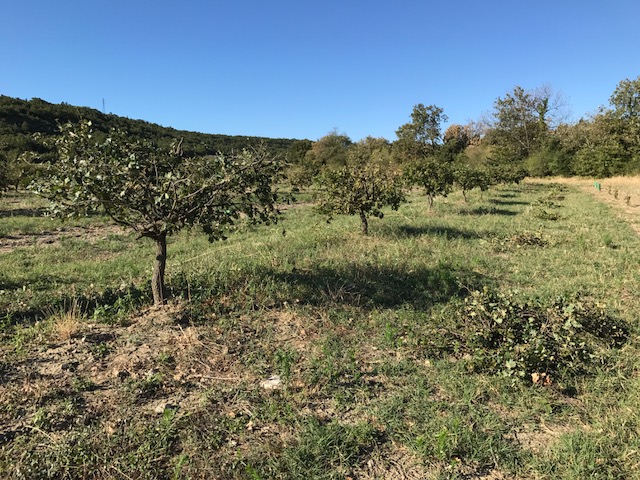
Between the rows, a natural limestone grass cover has been established, seeded with a mix of dicotyledons (clover, ryegrass, sainfoin…).
Their roots naturally “work the soil” at different depths, and the soil fauna (earthworms, insects…) circulates freely, improving underground exchanges.
SOIL WORK
Deep soil loosening helps aerate the ground.
“Burned” truffle areas remain oxygenated and flexible; weeds are removed, and truffle-bearing roots are cleanly pruned – not torn out as with traditional tools.
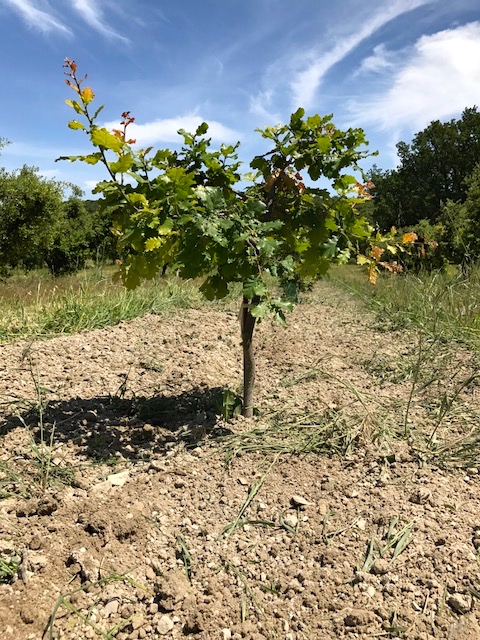
BONSAI PRUNING
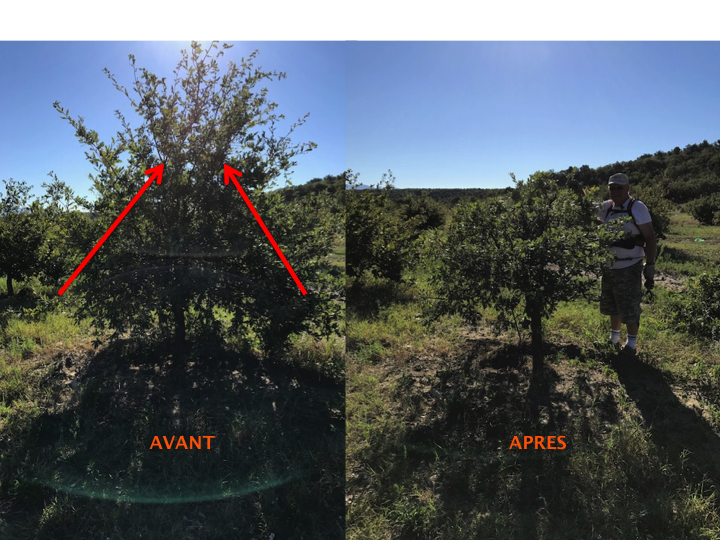
Pruning is essential in modern truffle growing.
Without it, truffle oaks become overly dense and eventually block sunlight, causing the truffle orchard to decline.
Early-season pruning (late winter/early spring) is not enough.
Summer pruning helps maintain optimal structure and air circulation.
Electric pruners are recommended for their ease and autonomy.
Summer pruning also reduces evaporation — both from the soil and the plant itself.
Imagine your tree as a solar panel: more leaves mean more light captured, improved photosynthesis, and better truffle production.
Why “Bonsai”?
Because this shape allows:
-
better planting density per hectare,
-
increased photosynthesis,
-
improved visibility under the canopy (to prevent pests, wildlife, or intruders).
MULCHING
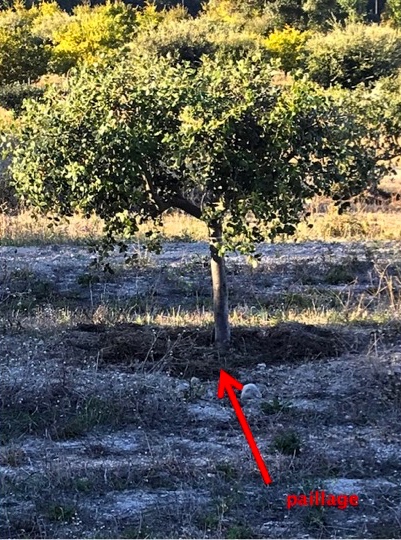
Grass clippings from the limestone cover are used to mulch the trees.
Mulching:
-
maintains freshness in truffle areas during summer,
-
protects the soil from extreme heat and cold,
-
limits evaporation,
-
provides organic matter that enriches the soil,
-
reduces weed growth, especially perennial grasses,
-
supports organic farming techniques.
Take care of Nature… and Nature will take care of your truffle orchard.
IRRIGATION
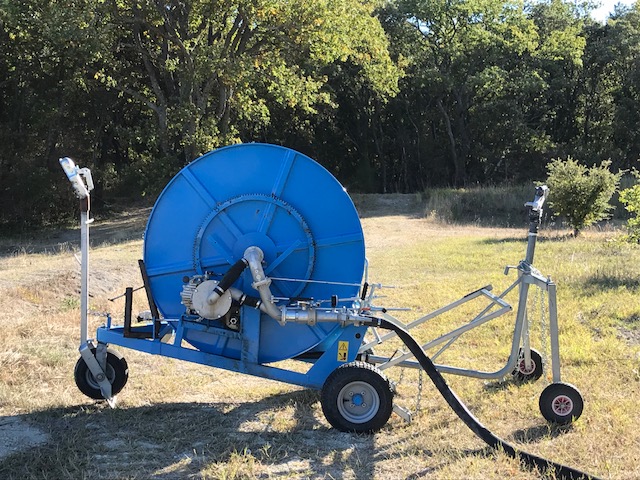
Irrigation complements spring and summer rain when necessary.
Water is essential for truffle growth, especially during the pairing period (May to June).
Irrigation must always be adjusted to soil type:
sandy soils require more watering than clay soils.
With a small reel irrigation system, adjusting water supply becomes simple and precise.
RE-SEEDING
“Give back to Mother Nature what you take from her.”
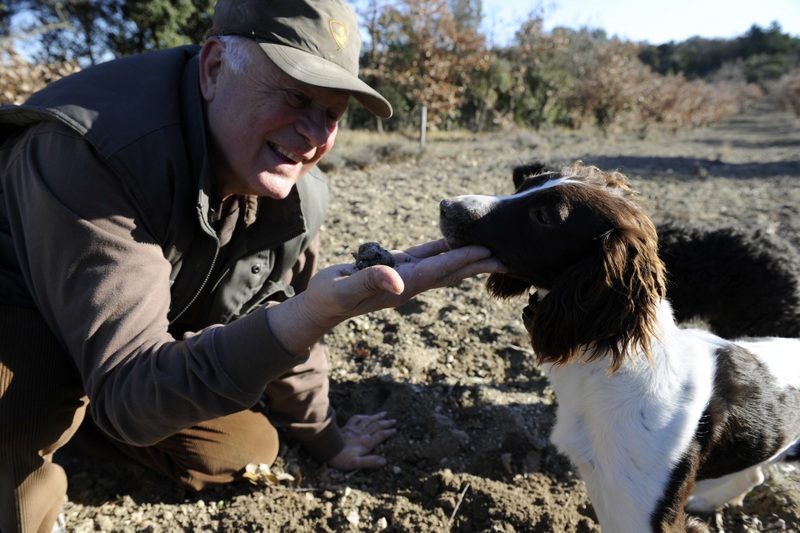
This means returning spores to your orchard, especially inside the truffle holes.
After harvesting a truffle, place a handful of crushed truffle material (soil-like texture) into the hole.
Once in contact with the root, spores will naturally re-seed the area —
and you may harvest truffles again at the exact same spot.
TRUFFLE NESTS
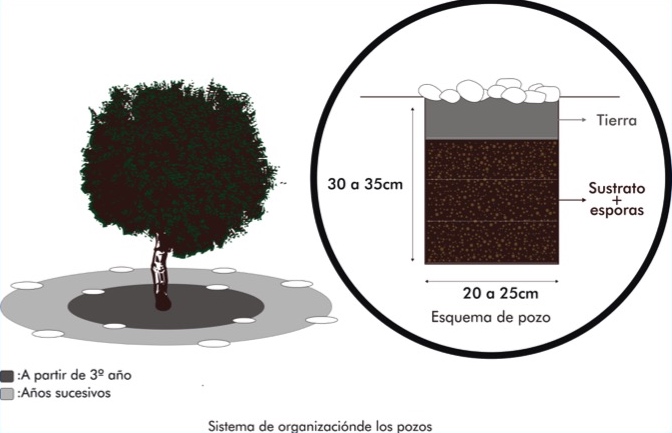
Inspired by Spanish methods, truffle nests help increase harvest volumes.
On oak trees aged 3 years or older, nests can be placed to stimulate production.
The substrate
Specially designed for truffle growing:
-
contains everything needed for truffle development,
-
has a balanced pH of 7.5,
-
includes premium-quality components, sterilized and enhanced with organic nutrients.
A QUALITY-DRIVEN APPROACH: ORGANIC FARMING
Organic farming is not a trend — it is a long-standing conviction at Domaine de Cordis.
Truffles are not naturally organic, so each plot must be certified each year.
Every treatment must comply with strict organic standards.
Only two treatments are allowed in organic farming:
Bordeaux mixture and wettable sulfur (for oak diseases like powdery mildew).
Since 5 years now, we no longer treat the trees, and they remain perfectly healthy.
Copper, however, accumulates in the soil and harms soil fauna, which is vital in truffle growing.
Avoid unnecessary copper – preserve your soil.
Healthy, living soil is one of your greatest allies.
Organic farming and truffle growing go hand in hand.